
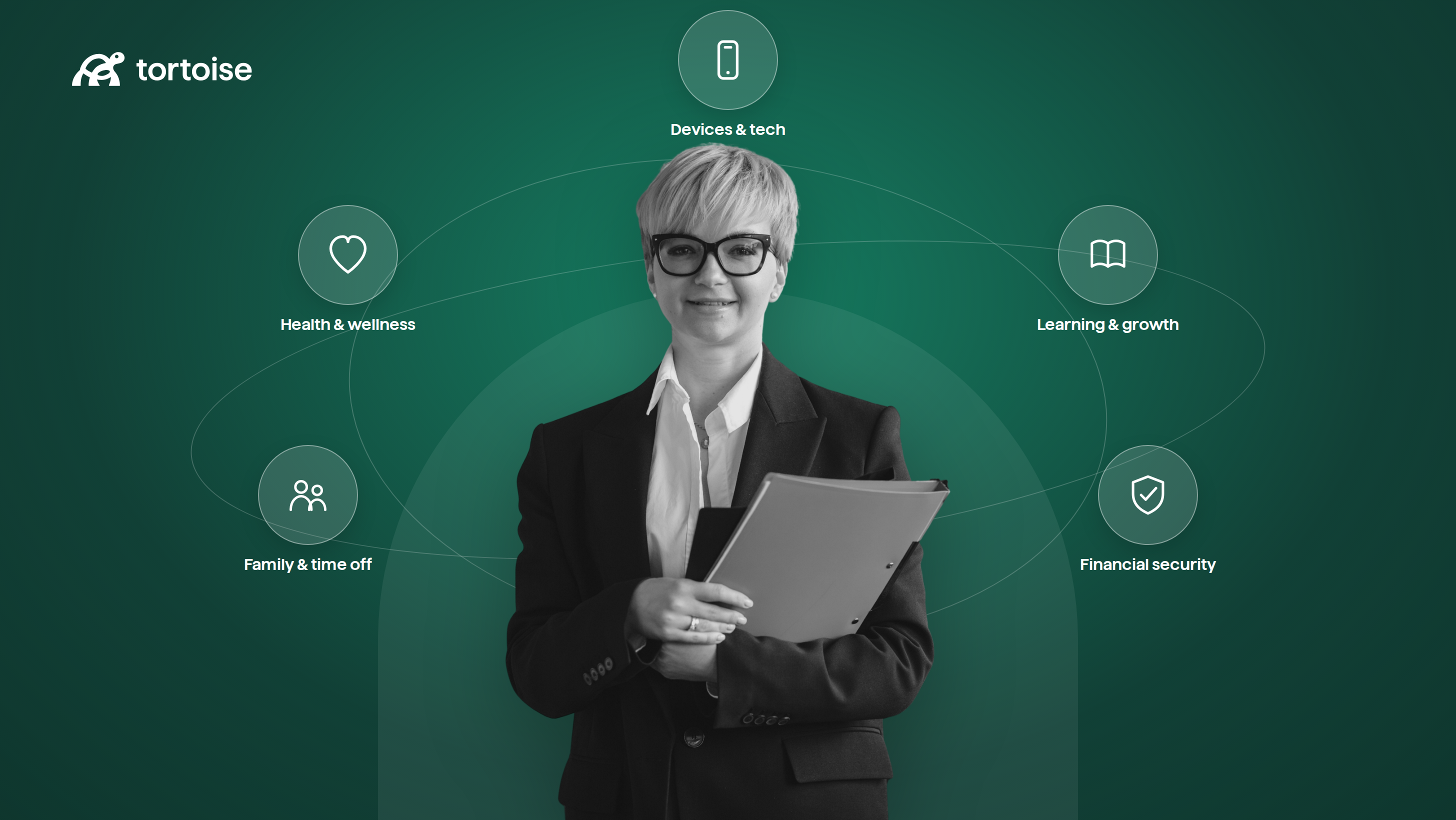
Types of Employee Benefits in India 2026: 5 Categories HR Leaders Should Prioritize
Employee benefits now sit much closer to business strategy than they used to. In India, they shape retention, productivity, employee experience, and employer brand as directly as compensation does. For leadership teams, the question is no longer whether benefits matter, but which benefits create real value without adding operational drag.
For anyone still asking what are employee benefits? Employee benefits are non-wage rewards, protections, and support programmes employers provide alongside salary. They cover everything from statutory obligations to voluntary offerings that improve health, financial security, flexibility, and day-to-day work.
That distinction matters in 2026. Some employee benefits types are legally required, while others help companies compete for talent and build a stronger employee value proposition. The strongest mix is the one employees understand, use, and trust, and one HR and payroll teams can run cleanly at scale.
This is where the five priority categories below help. They give HR leaders, CHROs, and CXOs a practical way to assess the best employee benefits in India while balancing compliance, employee relevance, and administrative simplicity.
Employee benefits in India
Employee benefits in India fall into two clear employee benefits categories: statutory benefits and discretionary benefits. Statutory benefits form the legal baseline, while discretionary benefits help employers differentiate. Together, they define the real quality of a benefits programme.
Statutory benefits include requirements such as EPF, gratuity, ESI where applicable, and leave obligations tied to law and company policy. Discretionary benefits include health upgrades, learning budgets, family-friendly leave, and technology access programmes. That is the simplest way to understand the main kinds of employee benefits without overcomplicating the picture.
The best company employee benefits are built around fit. HR leaders need benefits that solve real workforce needs, plug into payroll and HRMS workflows, and avoid manual exceptions that create compliance or employee experience issues.
For teams comparing employee benefits types, the focus should stay on what is mandatory, where differentiation truly matters, and how easy the whole programme is to operate in practice.
5 types of employee benefits
Not every benefit deserves equal investment. Some are foundational, some act as strategic differentiators, and some only work when the delivery model is strong. The first three categories below cover the most visible and practical areas where modern benefits programmes can improve both employee value and HR efficiency.
1) Comprehensive health and mental wellness benefits
Health remains the most expected type of employee benefits in India, but employee expectations have moved well beyond basic hospitalisation cover. Stronger programmes now include higher coverage limits, fewer restrictive room-rent caps, preventive health check-ups, and OPD support where the workforce profile justifies it. A benefit that looks good on paper yet remains too narrow in actual use will not feel meaningful to employees.
Mental wellness should also sit inside the core package rather than at its edge. That includes Employee Assistance Programmes, confidential counselling, multilingual access, manager sensitisation, and clear policy protection so employees do not fear professional downside for seeking support.
Separate India workforce research from Randstad also shows that 86% of employees report feeling motivated, but that motivation drops quickly when work‑life balance and growth needs are not met, which puts even more pressure on health and wellbeing benefits to do real work rather than exist on paper.
Comprehensive health and wellness benefits improve perceived employer support and help build a more stable, people-first culture. These benefits underperform, however, when communication is weak, access is fragmented, or managers do not know how to guide employees toward the right channels.
2) Device benefits and technology access
This is one of the most practical emerging workplace employee benefits for India’s hybrid and digital-first workforce. Structured device programmes help employees access laptops, phones, and other work-enabling technology through compliant, payroll-linked models. For employers, they can reduce upfront procurement friction while simplifying how devices are issued, maintained, protected, and recovered.
The business case is stronger than it first appears. Employees become productive faster when they have the right device from day one, and HR, payroll, and IT teams avoid the messy alternative of ad hoc reimbursements, inconsistent ownership rules, and unclear offboarding processes.
This is where platforms such as Tortoise become relevant in an operational sense. Tortoise supports device benefits through leasing structures, insurance and care coverage, HRMS and payroll integrations, and policy implementation support. For organisations exploring this model, the appeal extends beyond the perk itself to the ability to run a modern benefit with much less manual coordination across functions.
There is also a financial planning angle, but it should be framed carefully. Payroll-linked device programmes may create a tax optimization opportunity depending on company policy and applicable law. They should never be positioned as a guaranteed tax outcome, and the policy design needs alignment across HR, payroll, finance, and compliance.
3) Learning and development benefits
Learning and development has moved from optional perk to strategic retention tool, especially in skills-driven sectors. Among all employee benefits examples, this category sends one of the clearest signals that the organisation is investing in long-term employee growth rather than short-term output. That matters most for high-potential talent who want to see a future inside the company.
Common formats include learning allowances, certification reimbursement, paid study or exam leave, and access to premium learning platforms. These are useful benefits, but they work best when tied to real capability-building priorities. A scattered catalogue of courses rarely creates the same value as a focused pathway linked to role progression.
The strongest L&D benefits connect to internal mobility and workforce planning. When an organisation needs stronger managers, cloud skills, data capability, or compliance expertise, the benefit should support those outcomes directly. That makes L&D easier to justify, easier to measure, and more credible to employees.
4) Parental and time-off benefits
Family-focused benefits are becoming a sharper differentiator because they support employees at moments that shape loyalty most strongly. Many leading employers are going beyond minimum leave requirements with extended maternity leave where policy allows, paid paternity leave, adoption leave parity, wellness days, and sabbaticals for long-tenured employees.
Global SHRM research echoes this shift: in its 2026 Employee Benefits Survey, 82% of employers rate retirement and leave benefits as “very” or “extremely” important to workforce stability, and the share of employers offering paid parental leave, paid maternity leave beyond legal minimums, and paid family leave all rose by 5–7 percentage points year‑on‑year.
These benefits help reduce mid-career attrition, support inclusion, and strengthen employee trust in the organisation’s intent. They also reflect a more realistic understanding of how careers and caregiving responsibilities intersect.
Policy design matters here. Inclusive leave frameworks should consider biological parents, adoptive parents, and single-parent situations where applicable. When policy language is too narrow, the organisation may technically offer support while still failing the people it intends to help.
Time-off benefits also need clarity on manager approval, tenure rules, and team coverage. Without that clarity, generous policies can become unevenly accessible. Employees quickly notice when a benefit exists formally but depends too heavily on manager discretion.
5) Statutory and financial security benefits
This is the non-negotiable baseline across all employee benefits categories in India. EPF, gratuity, ESI where applicable, and leave-related obligations are not optional decisions. They are the foundation on which all other company employee benefits must sit.
From there, employers can strengthen the package with long-term financial security benefits such as group term life insurance and, where relevant, ownership-oriented benefits like ESOPs.
No amount of discretionary polish can make up for weak compliance on core obligations. When structuring these benefits, align closely with internal legal, payroll, and compliance teams rather than treating benefits design as a standalone HR exercise.
Choosing the right mix
Knowing the 5 types of employee benefits is only the first step. The harder decision is choosing the right mix for your workforce, operating model, and risk posture. In practice, that means resisting benefit sprawl and designing around relevance, usability, and governance.
Start with workforce needs
Workforce needs vary by role type, seniority, location, life stage, and whether employees work in office, hybrid, or distributed setups. A digital-first workforce may place higher value on device access and learning budgets, while another group may prioritise family support and long-term financial protection.
When employees cannot see themselves in the benefit design, utilisation will lag and HR will carry the burden of explaining low-value offerings. The goal is to build the right few employee benefits types with high perceived value.
Use flexible digital delivery
Flexibility matters because employee needs are not uniform. A rigid one-size-fits-all structure often leads to underused benefits, while a well-designed flexible model allows employees to direct value toward what matters most to them. That approach can preserve cost control while improving relevance.
Good programmes depend on automated enrolment, clear claims workflows, mobile-first access, and clean HRMS and payroll integration. This is especially true for operationally sensitive benefits, such as device programmes, where manual handling creates unnecessary friction across HR, payroll, finance, and IT.
Build for compliance and clarity
Every benefit policy should define eligibility, funding model, tax treatment, access steps, and exit implications. It should also be clear about who owns vendor accountability when something goes wrong. That level of clarity protects employees from confusion and protects HR teams from repeated exception handling.
Measurement does not need to be complex to be useful. Track adoption, ease of administration, employee understanding, and alignment with retention goals. The most sustainable company employee benefits are the ones employees can access without confusion and HR teams can administer without workaround-heavy processes.
Wrapping up
The strongest benefits strategy in 2026 blends mandatory protections with differentiated, high-utility offerings that employees actually use. For most organisations, that means a balanced portfolio across health and wellness, device benefits, learning support, family-friendly leave, and long-term financial security. That is the most practical answer to anyone comparing types of employee benefits, employee benefits types, or the broader question of what are employee benefits in a modern workplace.
A smart next step is to audit your current benefits against employee needs, operational ease, and compliance readiness, then close the highest-impact gaps first. If device-related benefits are part of that review, Tortoise can help you explore a compliant, payroll-integrated model that supports employees while reducing administrative friction for HR, payroll, and IT.
FAQs
- What are the main types of employee benefits employers should know about?
Broadly, there are two key employee benefits categories in India: statutory benefits and discretionary benefits. Statutory benefits cover EPF, gratuity, ESI where applicable, and basic leave. Discretionary benefits include health and wellness, device access, learning support, parental leave, and long‑term financial security. - What are some examples of company employee benefits that go beyond the legal minimum?
Examples of discretionary employee benefits include higher‑coverage health insurance, mental wellness support, payroll‑linked device programmes, learning allowances, paid parental leave beyond statutory norms, wellness days, sabbaticals, and group term life insurance. These employee benefits examples help employers stand out in competitive talent markets. - How can HR design the best employee benefits in India without creating operational complexity?
The best employee benefits in India balance relevance with operational ease. HR teams should align benefits with workforce needs, use flexible digital delivery through HRMS and payroll integrations, and define clear policies for eligibility, tax treatment, and exit rules. This keeps different types of employee benefits usable for employees and manageable for HR and finance teams.
Disclaimer: This guide is intended for general informational purposes only and should not be treated as legal, tax, payroll or accounting advice. Applicability of employee benefit laws in India depends on several factors, including the nature of the establishment, employee category, wage levels, location, headcount, employment terms and applicable central and state laws. Tax treatment of benefits may also vary depending on the structure adopted, documentation, payroll processing and the employee’s applicable tax regime. Employers should consult their legal, tax and payroll advisors before implementing or modifying any employee benefit programme.

Founder & CEO
Vardhan Koshal is the Co Founder of Tortoise, India’s fastest growing employee device benefit platform. He has led India growth and product for companies like TripAdvisor and Udacity, and earlier founded Ridingo, a car pooling startup recognised by Forbes as one of the Hottest Global Startups and acquired by Carzonrent. At Tortoise he works with HR leaders, CFOs and tax experts to design compliant, high impact device benefit programs for Indian employers.